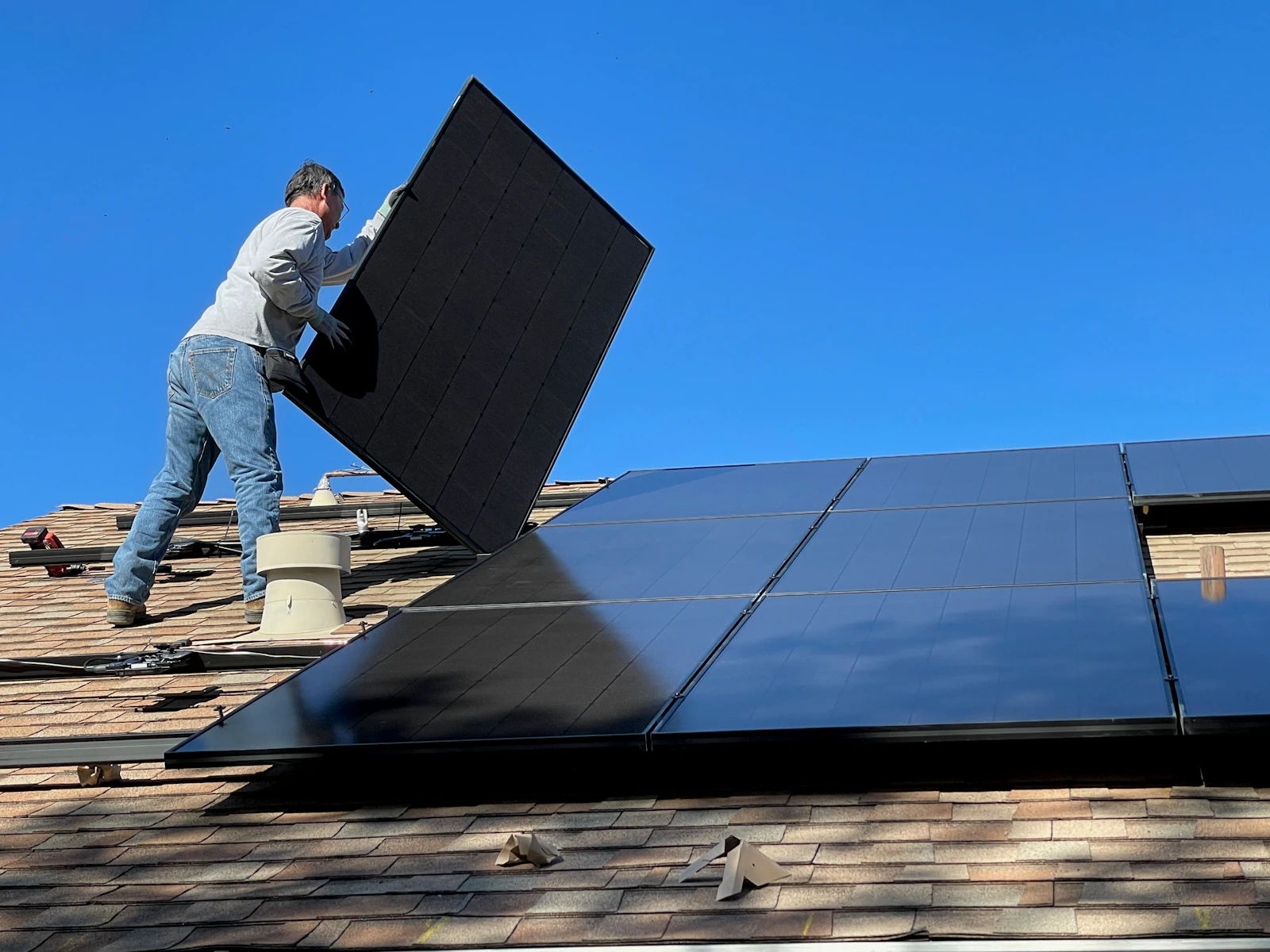
Serving all 50 states and DCSolar Panel Answers connects you with licensed local solar companies. We are not a solar contractor.
(833) 555-0176
United States

Solar panel cost for a house

A typical residential system runs 7.2 kW (median), with 2024 prices from $3.0-5.2/W. Sourced figures for sizing a home solar cost estimate properly.

Solar panel cost for a house
What size system does a typical house need?

The median U.S. residential system installed in 2024 was 7.2 kW, per Lawrence Berkeley National Laboratory, with the middle 60% of installs (20th–80th percentile) ranging roughly 4 to 11 kW. The mean was higher, at 9.3 kW — pulled up by larger systems — so median is the better figure for what a typical household actually installed.

Solar Panel Answers connects you with licensed local solar companies. We are not a solar contractor.

How does system size translate to a price range?

Multiply the size by the per-watt price band. At the 2024 median of $4.0/W, a 7.2 kW system implies roughly $28,800 before any incentive — using the 20th–80th percentile band of $3.0–$5.2/W, the same system spans roughly $21,600 to $37,440. These are derived figures, arithmetic on the sourced per-watt and system-size data, not a quoted total from any source — treat them as a starting frame, not a quote.

Does my state change the typical system size?

It can — California's median was notably smaller at 5.7 kW in 2024, while most other states had medians above 7 kW, per LBNL. Roof size, household electricity use, and local sun exposure all plausibly factor in, though this brief doesn't have a sourced breakdown by state beyond the California figure.
Does my state change the typical system size?

Why do modeling benchmarks use a different size than the survey median?

Because they're answering a different question. NREL's cost-benchmark and Annual Technology Baseline modeling both use roughly 7.9–8 kW as a representative configuration for calculating a levelized cost of energy — a modeling assumption, not an observation of what people actually installed. Don't treat 7.9–8 kW as "the typical system"; that's the median 7.2 kW figure from actual installs.

Sources

3 cited
  1. System size data, 2024 installs: Lawrence Berkeley National Laboratory, U.S. Distributed Solar and Storage — 2025 Data Update, October 2025 (checked 2026-08-18).
  2. Per-watt price percentiles: LBNL, ibid.
  3. Modeling benchmark system sizes: NREL/TP-7A40-92536, January 2025; NREL 2024 Annual Technology Baseline, Residential PV (checked 2026-08-18).
How it works

From “is it worth it?” to a number you can check

1

Start with your power bill

The kilowatt-hours you used over the last year is the number every honest quote is built from. Without it, any price is a guess.

2

See what the roof can actually make

Pitch, orientation and shade decide how much of that usage a system can realistically cover. This is the step door-to-door pitches skip.

3

Put the quotes on one basis

Cash, loan and lease are three different products. Compare system size and total price first, then compare the financing separately.

4

Matched with a licensed local company

The work is done by licensed local solar companies. We do not sell panels and we do not fit them.

How we work

What to expect from this site

Every figure here carries its source and the date it was checked.

Answer first, then the working

Each page opens by answering its own question in a couple of sentences, then shows the arithmetic underneath for anyone who wants to check it.

Ranges, not one confident number

Solar pricing moves with the roof, the state, the utility and the financing. A single national figure fits almost nobody, so we publish the spread our sources support.

We say when the maths does not work

A shaded roof on a low tariff can be a poor buy. That is a legitimate answer to the question and you will find it here rather than a reason to keep reading.

We are not the contractor

We do not sell panels and we do not fit them, so nothing here depends on you signing. Licensed local companies do the work.

Questions

Frequently asked

The questions homeowners actually ask before they sign anything.

What size solar system does an average house need?

7.2 kW was the median for 2024 U.S. residential installs, per LBNL, with a typical range of roughly 4 to 11 kW covering the middle 60% of installs.

How much would a 7.2 kW system cost?

Using the 2024 median of $4.0/W, that's roughly $28,800 before incentives — though this is arithmetic on the sourced figures, not a quoted total, and actual quotes ranged from about $3.0 to $5.2/W depending on financing and other factors.

Why did my neighbor's system seem smaller than mine?

System size varies by household electricity use, roof space, and location — California's 2024 median was notably smaller (5.7 kW) than most other states (above 7 kW), per LBNL, so regional variation is real.

Is a bigger system always better value per watt?

That specific relationship isn't broken out in the sourced data for this brief — size, financing method, and included cost categories (permitting, roof work) all move the per-watt price independently.

Get matched with a licensed local solar company

Request a QuoteCall Now